
Blog · Planning
Christopher Dardarian · NOV 24, 2026
Ravines and Slope Stabilization Using Planting and Natural Shoring Techniques
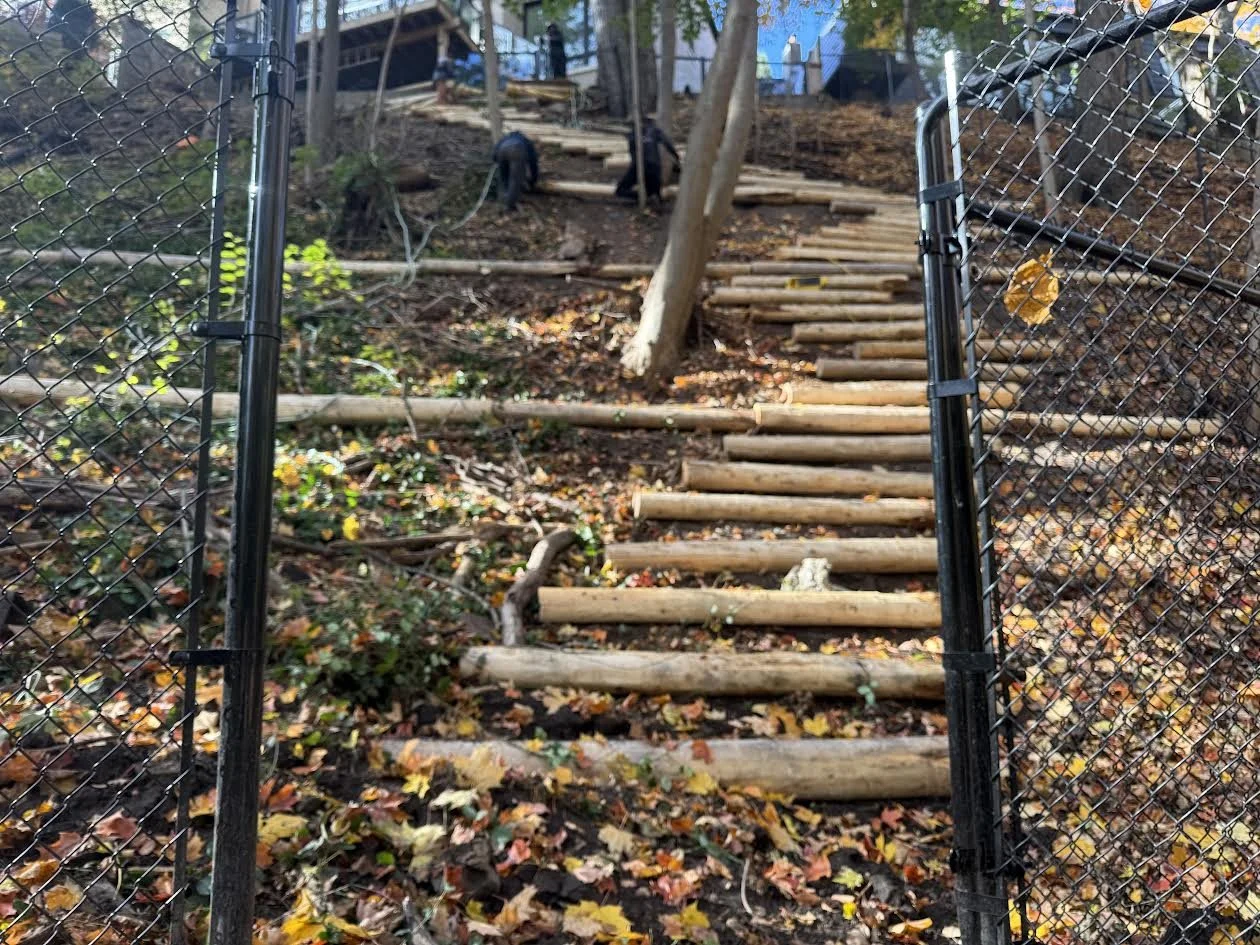
Although the Greater Toronto Area isn’t known as a mountainous region, it has extensive networks of ravines and rivers creating some unique and beautiful topography. Properties near these natural features are highly desirable, with thousands of ravine lots found throughout the GTA.
These unique properties give a nature-filled experience set in forested areas. They also come with a need for stewardship, with homeowners looking to preserve these features and maintain the health of the natural environments. One of the biggest potential issues is erosion, specifically on steep slopes that lack stability. This article explores some simple techniques that can be used to shore up ravine slopes, stop erosion and potential slope collapse, loss of trees and property damage.
What Causes Erosion and Why it Happens on Sloped Terrain
Erosion is the natural process where soil, rock, and earth materials are worn away and transported by forces like water, wind, ice, or gravity. These forces impact land differently depending on its characteristics.
Bare, sloped and unprotected land experiences heavy erosion, while land that is flat and covered in leaf litter and plants with extensive root systems will resist the pressure from erosion. Human activities like deforestation, construction, or development remove these natural protections and cause increased rates of erosion if not mitigated. Lands that experience high rates of erosion absorb less water making them dry and hard, creating a cycle of increased erosion that is hard to reverse.
Steep slopes are particularly vulnerable because of increased gravitational pull, high-velocity water runoff, and a lack vegetative cover. This vulnerability means the land is susceptible to landslides and slope failures including large falling trees, retaining wall collapse and other failures that may cause property damage.
Another factor to consider is soil type and its relative erodibility.
Silty soil has the highest rates of erosion and is composed of fine, light particles that detach easily and block water from soaking in.
Sandy soil is moderately erodible with large particles that don’t stick together and are easily washed away.
Clay soil has a low to moderate rate of erosion with tiny particles bound together to resist being dislodged.
Loamy soil has the lowest rate of erosion. It’s a balanced mix of sand, silt, clay and organic matter that forms stable clumps that absorb water well and resist run-off.
Soil types can be changed and improved over time through various practices with the goal of creating loamy soil to resist erosion.
Natural Stabilization Techniques for Erosion-Prone Land
To reduce erosion and stabilize a problem slope, there are several techniques and practices we can incorporate. Depending on your specific situation, one or several of these techniques should be implemented. With the right design and correct implementation, you can create a positive feedback loop that self-perpetuates and manages itself without the need for annual landscape work. Nature knows best and will do the work for us if it’s set up properly in the first place.
Goal 1 - Create a More Terraced Slope
Terracing techniques create flat areas that trap sediment and let water pool and soak into the ground, helping to improve soil structure. They also create areas to plant deep-rooted and fibrous-rooted plants to bind the soil. These terraces can be created by using natural materials like field stones dug into the slope and wood logs laid horizontally across the slope. On the high side of the terrace, you can add mulch from ravine wood or bring in your own shredded wood mulch to encourage stable flat pockets, ready for planting.
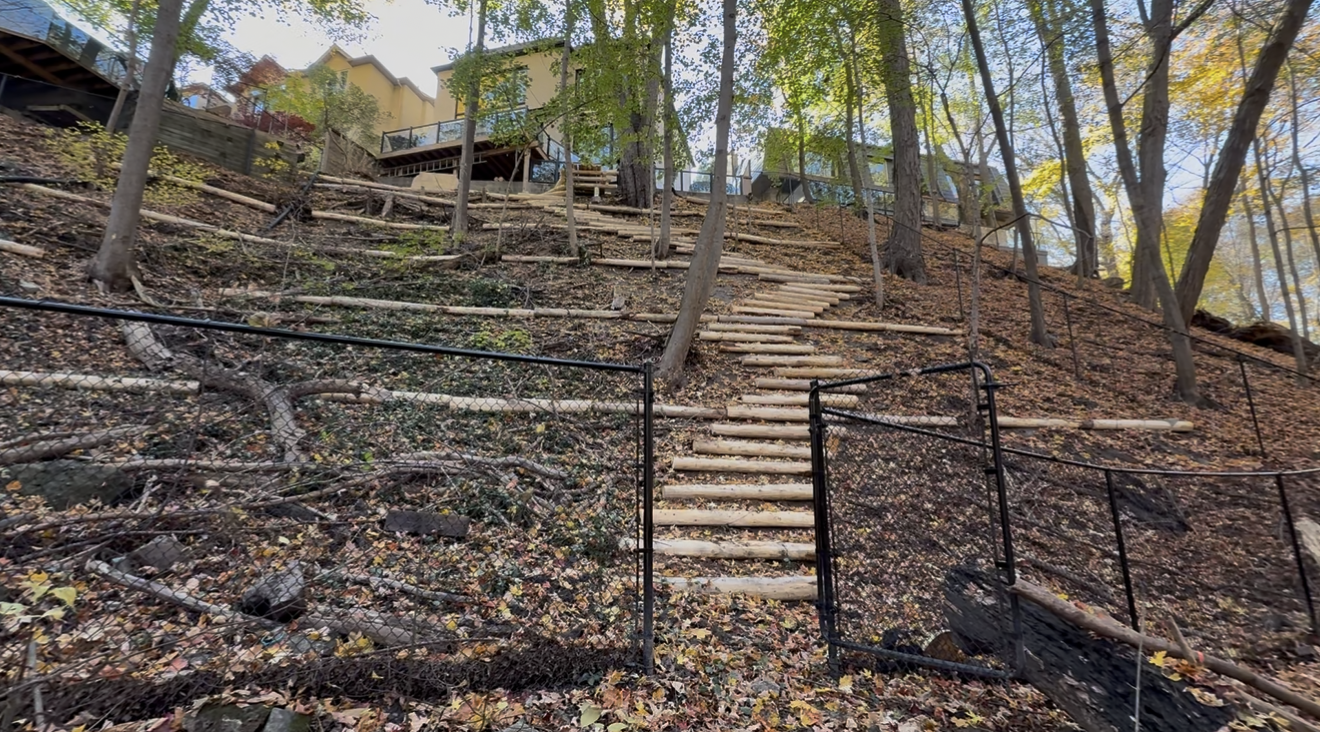
Terracing can be made by using a technique called cribbing, also known as a crib wall. It’s a structural retaining system built from interlocking natural timbers or logs to form a terrace line across a slope’s contour lines. Cedar rounds measuring 6–9” in diameter are installed and held in place with rebar spikes driven through the timber into the ground below the frost line. With cribbing, water permeates on these flat terraced areas and fallen leaves and twigs collect that would normally get washed away. It improves soil structure while decreasing erosion.
Cribbing can be done in a straight line or stacked in a criss-cross pattern. It can also take the form of an open box-like grid filled with soil, mulch, and gravel rock. The bonus of cribbing is that it can be used to create an informal set of steps to help you access the ravine particularly with drastically steep slopes. It has a natural appearance and blends into the environment.
Goal 2 - Anchor the Ground with Native Plants
The goal is to plant deep-rooted grasses, shrubs, and perennials that develop dense, fibrous root systems that act like natural rebar. Many native species have extensive root systems and spread through underground roots called rhizomes, which help the plants spread across the slope and lock in soil with their root system.
When water and wind hit the soil, the earth is held in place by this root system while leaves and woody materials get trapped on the soil’s surface, creating a layer of mulch that gradually improves soil structure and promotes loamier soil. Sunlight levels, existing trees, and other features need to be considered when choosing the plants, and it is highly advisable to have a professional plan in place.
Some naturalization projects involve the use of willow or dogwood cuttings that are woven together and layered into the cribbing. The plants eventually take root, with their aggressive root systems doing the work of stabilization.
Other Strategies to Stabilize the Slope
There are numerous engineered products that can be used to stabilize the slope. The following are some examples:
Erosion Control Blankets are rolled mats made from woven straw, coconut coir, or synthetic fibres pinned down over bare slopes. The slope is seeded and planted into the mat which provides instant stability while the plants take root.
Geocells are expandable, honeycomb-like grids made of high-density polyethylene (HDPE) that are staked into a hillside and filled with soil, gravel, or concrete to lock material in place.
Wattles & Silt Socks are long, tubular mesh sleeves filled with straw, wood chips, or compost that are staked across slopes to slow down runoff and trap moving sediment.
Gabion Baskets & Mattresses are heavy-duty galvanized wire mesh cages filled with angular rocks. Stacked like giant building blocks, they create flexible, free-draining retaining walls or channel linings.
Riprap with Geotextile Underlayment are large, quarried, angular stones placed over a synthetic filter fabric to armor steep embankments and drainage ditches against rushing water.
Design and Planning Considerations
A landscape project of this scale and scope needs to be planned properly. There are many things to consider and capture within a professional site/landscape plan. A detailed plan allows contractors, like Stema Gardens, to bid appropriately with all the quantities and specifications defined. Certain projects may require permissions from municipalities or conservation authorities. Applications/permits are sometimes required and are typically handled by your landscape professional.
Stema Gardens has a history working on these types of environmental projects. Our background in horticulture and environmental restoration is a big part of our story, and we would be happy to share this with you. This work is a growing field of landscape practice that often involves challenging regulations and conservation requirements.
We would be happy to discuss your property and potential project with a free consultation. Please call Chris Dardarian at 416-797-6127.
Follow Stema Gardens on Instagram