
Budgeting and Planning for a Custom Outdoor Space
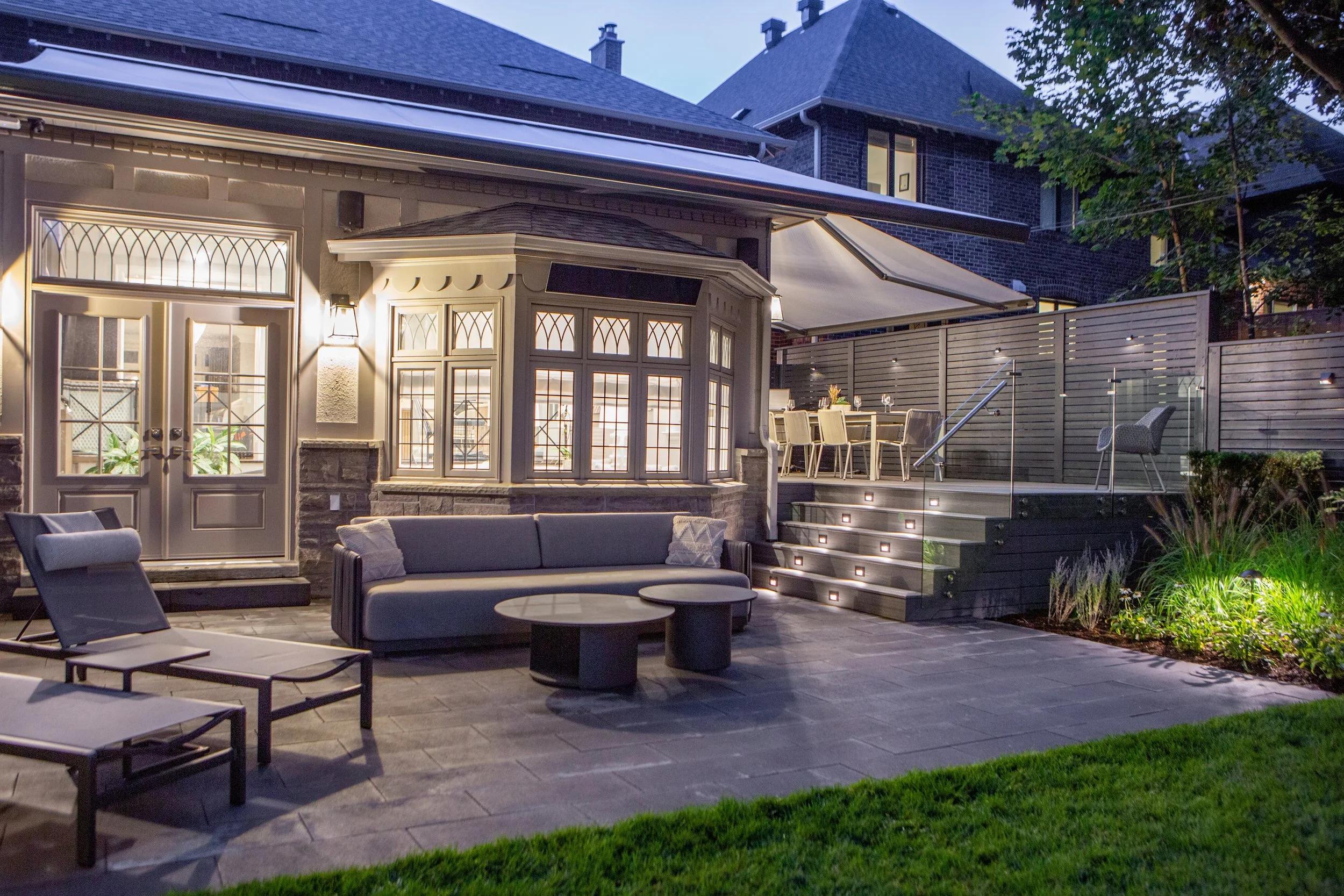
With Victoria Day long weekend coming to an end, summer has begun in Canada, with many Southern Ontario homeowners turning their attention to creating custom outdoor spaces to relax and entertain guests.
The prospect of creating new gardens, installing a pool, or adding patios and outdoor lighting is exciting to contemplate. As the owner and operator of Stema Gardens, I see the bright emotions on the faces of my clients as they relay the ideas and dreams they have about the possibilities for their outdoor space. The energy and passion they have is infectious, and as a landscape designer, it’s extremely motivating, especially during the initial planning stages.
Combined with the enthusiasm for the possibilities we can create, there is one very important aspect of planning for a new custom outdoor space that needs to be considered at the outset, and that is the project budget. Although it may seem daunting, creating a realistic budget early in the process is one of the best ways to design within realistic scope of work. It helps avoid disappointment, unnecessary stress, and prevent costly mistakes, ensuring that your new outdoor space delivers everything you are looking for within realistic financial constraints. The goal is to provide value and lasting enjoyment regardless of the budget you are working with.
Begin with a Clear Vision and an Emphasis on Design and Planning
Before putting too much thought into features, materials, or timelines, I always encourage homeowners to think very carefully about how they want to use their outdoor space. Some people want an area designed for entertaining guests, prioritizing patios, outdoor kitchens, and structures, while others are looking for a more peaceful sanctuary where they can relax and listen to the sounds of nature. Some people want a space for children’s activities and are thinking about sports courts, swimming pools, play structures, or recessed trampolines.
Ask yourself, would you rather have a spacious patio for hosting, a backyard oasis centered around a pool, or a secluded garden sanctuary? Does modern minimalism appeal to you, or are you more interested in an English Garden or a meadow-like setting? Having a clear vision from the beginning shapes every other decision that follows, big or small. It also helps establish priorities. If you know exactly what matters most to you, it becomes much easier to allocate your budget effectively and avoid spending money on features that may not actually improve the day-to-day enjoyment of your space.
Understand the Associated Costs
One of the biggest surprises that homeowners face is the amount of underground and less visible work that happens as part of a landscape project. People tend to focus on the finished aspects of the project, including things like swimming pools, patio stones, cabanas, or a garden suite studio. Although this makes up a large part of the overall budget, there is a considerable amount of work that happens below ground, as well as off-site and in the office.
A typical landscape scope of work includes things like site preparation, demolition of existing features, excavation, disposal, grading, drainage, structural foundations, base prep for stone, garden prep with new soil and associated labour and transportation costs. While these factors are less noticeable by comparison, they can have a major impact on pricing and add to the final budget of the landscape estimate. In some cases, properties with difficult access points or uneven terrain require additional preparatory work before any construction can even start. The earlier this is understood and considered in the design and planning stages, the easier it becomes to establish realistic expectations and a strong direction for the project, which will avoid unnecessary frustration later in the process.
Common Budget Mistakes
Over the years, I have noticed some common budgeting mistakes that homeowners tend to make when planning custom outdoor spaces.
The first is not providing your landscape designer with a project budget from the start. There is a concern that if a contractor is aware of your budget, they might be tempted to price the project based on that number. But for a landscape designer, the budget number is crucial, as it dictates what is possible and how things should be laid out to work within that budget. A good landscape designer should know what landscape elements cost and be able to design within your budget, ultimately keeping the contractors honest in their pricing.
Another mistake is making major design changes after contracts have been put in place and construction is about to start, or has already started. Small changes in one area can impact other aspects of the project causing a chain reaction throughout. This can lead to delays, impact scheduling, and of course, increase the price tag. I like to remind my clients that placing an emphasis on design and planning and sticking to the agreed-upon plan will allow the project to go smoothly and avoid costly errors and changes. There will always be some minor adjustments, but spending on design will save you money and headaches in the long run.
Features Worth Prioritizing (That You May Not Have Thought About)
When working within a budget, there are certain features I generally recommend my clients prioritize because they contribute significantly to the functionality and long-term value of any custom outdoor space. They are as follows:
Proper drainage systems
Durable hardscaping materials
Planting large sized trees for immediate impact
Quality outdoor lighting
High-quality construction materials
While these items can increase the budget, good foundational elements are what ultimately determine how durable, weather-resistant, and enjoyable the space will be over time. The last thing you want is to have to replace or modify elements because you didn’t want to spend on a quality patio paver, or try to save money on drainage only to have issues with failing landscape elements due to water problems.
Think of your garden space along the same lines as your house. Your favorite parts may be the spacious kitchen, the living room, and the luxurious bathrooms, however the waterproofed foundation, quality HVAC system, and good-quality windows are what make the entire structure function properly. Likewise with yards and outdoor spaces, effective drainage systems, durable materials, and things like high-quality lighting are the unsung heroes.
Consider Phased Projects
Not every outdoor project needs to be completed all at once. In fact, phased projects can sometimes be a practical solution for homeowners who have long-term plans but want to spread out the costs over time. The main caveat with phasing a landscape project is that an even bigger emphasis on planning is required to make sure that any work done in an early phase isn’t impacted by future work. Think about laying a new patio and building new fencing during phase one and then having to drive large machines across it in phase two while excavating for a pool. The more logical plan would be to open access and excavate for a pool in phase one, then go back to patios and fencing in phase two.
A professionally designed master plan allows future additions to be incorporated later without disrupting work already completed in early phases. In most cases the best course of action is to do all the work up front, however budgets are a reality and may not allow for that. For clients who need or want to build strategically over multiple seasons, phasing can be a useful approach, but one that requires considerable planning to avoid costly mistakes.
Final Thoughts
A custom outdoor space is a significant investment, but one that can dramatically improve how homeowners enjoy their properties. Often, a significant investment in the landscape will increase the property’s resale value. In my experience, the most successful landscaping projects are the ones that balance creativity, practicality, and realistic financial planning, keeping this in mind from the start.
By adopting the approach outlined above, homeowners will be well-situated to create custom outdoor spaces that are visually striking, highly functional, built to last and importantly on time and on budget!
If you would like some assistance with a landscaping project, please don’t hesitate to contact me, Christopher Dardarian, owner and operator of Stema Gardens, by email at info@stemagardens.ca, by phone at (416) 797-6127. I can also be reached through the website’s online contact form, or by visiting the business in person at 306 Park Lawn Road in Toronto.